

Utilities

Little Snitch

Little Snitch is a macOS network firewall and monitor for people who want to see which apps contact which domains and decide how those connections should be handled.

Apple SiliconIntel€59 one-time for a single license
Official destinations€59 one-time for a single license · Paid one time

macOS 14.0 or later

Availability

Available for macOS

Apple Silicon; Intel

Implementation

Mac network monitor and outbound firewall application

Evidence last checked

Verification

2026-08-21

Reviewed Overview

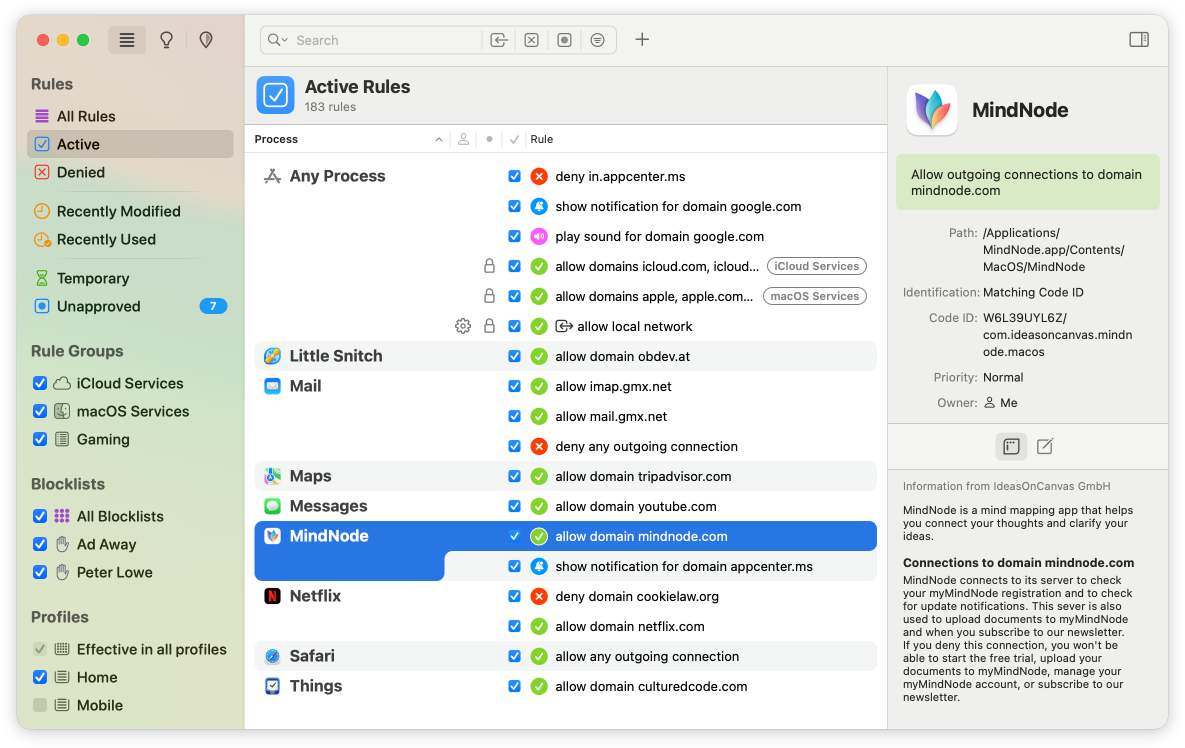
Little Snitch is a macOS network firewall and monitor for people who want to see which apps contact which domains and decide how those connections should be handled. Objective Development's current product page describes two working modes: an alert flow that asks about a connection and a silent flow that applies existing rules. Its Network Monitor presents process and connection information, while the rule manager can organize app, domain, and system-wide decisions. The current official download page identifies Little Snitch 6.4.1 as compatible with macOS Tahoe, Sequoia, and Sonoma. A read-only inspection of that exact official DMG found x86_64 and arm64 slices in the main application executable, with a declared minimum macOS version of 14.0. The vendor sells direct licenses and offers demo mode without a license key, but its product page says the Network Monitor expires after 30 days in that mode. This is a security-sensitive tool: its purpose is to observe and control outgoing connections, so rule changes can interrupt apps or services. Start by reviewing alerts and existing connections rather than denying broad categories blindly, and check the current license and upgrade terms before buying for more than one person or computer.

Reviewed Features

  • Review outgoing network activity by process and domain in Network Monitor, then inspect a selected connection's details before deciding what rule to create.
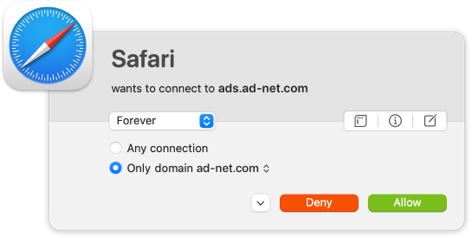
  • Use Alert Mode to decide whether a specific connection should be allowed or denied, including a scope such as only the named domain.
  • Use rule groups and profiles to organize connection decisions for applications, macOS services, and network contexts.
  • Install the current official 6.4.1 build on either Intel or Apple Silicon Macs; the architecture claim is limited to the inspected vendor-hosted DMG.

Reviewed Workflows

  • Observe a new connection alert, identify the app and requested domain, then allow or deny the narrowest rule that matches the intended use.
  • Use Network Monitor to trace an application's active connections, then return to the rule manager to refine an existing application or domain policy.
  • Install the current architecture-matched build, evaluate the firewall in demo mode, and confirm the direct license scope before rolling it out to more Macs.

Cautions

  • Little Snitch observes and controls outgoing network connections, so an overly broad deny rule can interrupt an application's expected network access; review the process and domain before saving a policy.
  • The official product page says demo mode provides protection and functionality without a license key, but Network Monitor expires after 30 days; that affects ongoing evaluation workflows.
  • Direct license choices and upgrades have different current scopes and prices; verify the official order page before purchasing for a family, team, or multiple computers.

Verification Sources

These official or authorized sources support only the fact groups listed with each link. They were checked on the date shown; pricing, compatibility, and availability can change.

  • Official product page — obdev.at

    Checked

    Covers: Identity & editorial context, Pricing & purchase, macOS availability & requirements, Platform & architecture, Review date, Features, workflows & cautions, Official media

  • Official release notes — obdev.at

    Checked

    Covers: Pricing & purchase, macOS availability & requirements, Features, workflows & cautions, Official media

  • Official pricing — obdev.at

    Checked

    Covers: Pricing & purchase, macOS availability & requirements, Features, workflows & cautions, Distribution & official destinations

  • Official release notes — obdev.at

    Checked

    Covers: macOS availability & requirements, Platform & architecture, Features, workflows & cautions

Screenshots

Little Snitch rule manager listing active network rules for Mac applications and domains.
Little Snitch connection alert for Safari offering a choice to deny or allow a domain request.

Reviewed Similar Apps

Alfred

Productivity

Alfred is a keyboard-first Mac launcher that can search applications, files, web searches, and selected system features from one command window. The free core is useful when you mainly want quicker app launches and file lookup without committing to a complicated automation setup. Its Powerpack is the paid layer: it adds workflow creation, clipboard history, snippets, richer search controls, themes, and other advanced tools that turn a launcher into a personal command surface. Workflows are a particularly good fit for repeatable local actions because they can connect hotkeys, keywords, actions, and script-driven results without requiring a custom Mac app. The trade-off is that the richer setup rewards deliberate configuration. Clipboard history can contain material that was copied from elsewhere, and a workflow that calls scripts, contacts, files, or online services should be inspected before use. The current official Alfred 5 page lists a free download, a 64-bit build for Intel and Apple Silicon Macs, and macOS 10.14 or later. If Powerpack features are central to your work, confirm the current license type and upgrade terms on the vendor's shop before buying rather than treating the free launcher as the whole product.


Free core app; Powerpack £34 Single License or £59 Mega SupporterApple SiliconIntel
Running with CrayonsView details

Keyboard Maestro

Utilities

Keyboard Maestro is a Mac automation editor for people who are willing to turn repeated desktop work into named macros. A macro can react to a hot key, a schedule, an application state, or another trigger, then combine actions such as launching an app, arranging windows, inserting text, controlling menus, transforming clipboard data, running a script, or filling a web form. That breadth is useful when a job crosses several applications, but it also means the first useful setup takes some thought. Version 11 is a one-time purchase for the current major version, not a subscription; its license is per user and can be used on up to five Macs. Stairways Software says future major versions may require a paid upgrade, so a buyer should treat the current license as version-specific rather than an unlimited-update promise. The current product page requires macOS 10.13 or later and says the app is native on Apple Silicon. Inspection of the current official 11.1.1 download found both x86_64 and arm64 executables. Its security settings pane surfaces the macOS permissions that let macros act on other applications, making it a better fit for users who can review those permissions and test automation carefully.

US $36 version 11 licenseApple SiliconIntel
Stairways SoftwareView details

Raycast

Productivity

Raycast is a keyboard-first command surface for Mac users who want to launch apps, find files, run built-in utilities, and reach smaller workflow tools without opening a chain of separate windows. Its root search can bring together commands, snippets, quicklinks, clipboard history, window management, and extensions in one interface. The free tier includes the core feature set and access to the public Extensions Store, while Pro adds account-backed features such as Raycast AI, Cloud Sync, custom themes, and expanded history and notes. That split matters: the paid plan includes AI, and its subscription renews unless cancelled. Raycast also offers limited free AI messages and supports compatible bring-your-own API keys or local Ollama models, but those choices are not a substitute for checking the current plan and provider terms. The current official quickstart documents the V2 beta for macOS Tahoe and Apple silicon, so people on older Macs or different hardware should confirm the appropriate current download before changing their daily launcher. It is best for users willing to learn a hotkey and assemble a personal command set; a lightweight single-purpose app may be clearer for someone who only needs one utility.

Free plan with paid Pro, Teams, and Enterprise plansApple SiliconFree plan with paid Pro, Teams, and Enterprise plans

Included Collections