

AI

Superwhisper

Superwhisper is a macOS voice-to-text app for turning spoken input into text in the application you are already using.

Apple SiliconIntelFree tier with monthly, annual, and lifetime Pro plans
Official destinationsFree tier with monthly, annual, and lifetime Pro plans · Freemium mixed

macOS 13.3 or later

Availability

Available for macOS

Apple Silicon; Intel

Implementation

Mac menu-bar voice-to-text application

Evidence last checked

Verification

2026-08-21

Reviewed Overview

Superwhisper is a macOS voice-to-text app for turning spoken input into text in the application you are already using. Its official Mac page describes a menu-bar tool that starts from a shortcut or push-to-talk control, then types the result at the cursor without requiring an app-specific extension. Alongside live dictation, it can transcribe audio files and apply an optional second language-model step for formatting or transformation. The current download page requires macOS 13.3 or later. Superwhisper's documentation distinguishes local and cloud choices: a local voice model can keep transcription on the Mac, while cloud transcription or AI post-processing sends audio or text through the selected service. That makes model selection a material privacy and connectivity decision, not a background implementation detail. The official Pro documentation lists a free tier plus paid plans and says a Pro license covers its supported Mac, Windows, and iOS devices. Initial setup also asks the user to configure a microphone and required system permissions for dictation. It is best suited to people who regularly draft messages, notes, or technical text by voice, but it is worth testing the selected model, microphone input, and data path before dictating sensitive material or relying on cloud-assisted formatting.

Reviewed Features

  • Start system-level voice dictation from a shortcut or push-to-talk control and place the resulting text in the active Mac app without installing a plugin or extension.
  • Choose a local speech model for an offline transcription path, or choose a cloud voice model when the selected workflow needs server-side processing.
  • Transcribe an existing audio file instead of dictating live, then use an optional language-model stage when a mode is configured to format or transform the transcript.
  • Use the free voice-dictation tier for basic transcription, or select Pro for local models, custom modes, custom vocabulary, speaker separation, and expanded cloud-model access.

Reviewed Workflows

  • Hold the configured push-to-talk shortcut while writing in a Mac app, then review the inserted result before sending the message or saving the note.
  • Select a local voice model and an unprocessed voice mode when offline use or keeping dictated audio on the Mac is more important than cloud-model options.
  • Drop in a recorded interview or voice memo for transcription, then choose whether any optional post-processing model is appropriate for the resulting text.

Cautions

  • The initial macOS setup includes microphone and system permissions for dictation, so the app cannot provide its primary live-input workflow until those permissions are configured.
  • Local and cloud modes have different data paths: cloud transcription or AI post-processing can send audio or text through a service, while a fully local configuration is needed when material must stay on the Mac.
  • Current paid terms vary by billing period and purchase channel; check the official Pro page before buying, especially if you need local models, custom modes, or the cross-platform license scope.

Verification Sources

These official or authorized sources support only the fact groups listed with each link. They were checked on the date shown; pricing, compatibility, and availability can change.

Screenshots

Superwhisper dark interface showing the voice-to-text app's dictation and text-processing workspace.
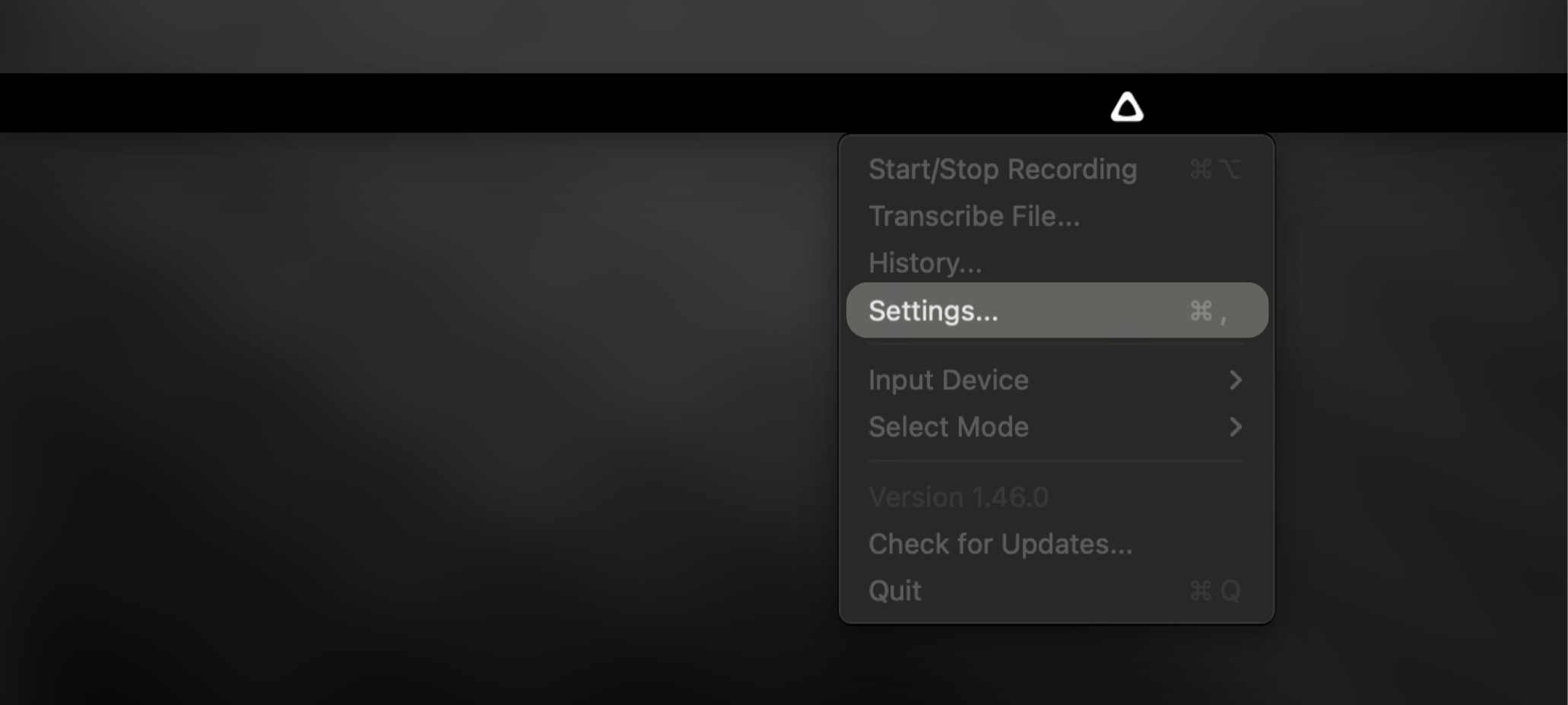
Superwhisper settings menu used to select models and configure dictation controls.

Reviewed Similar Apps

Audio Hijack

Video & Audio

Audio Hijack is a Mac audio-capture application for people who need a repeatable recording setup instead of a single device input. Its session canvas combines source, processing, and output blocks, so a project can capture a selected application, a microphone or other input device, or all system audio, then send it to a file, device, stream, or broadcast destination. That approach is useful for podcasters, remote-call producers, and anyone who needs a saved audio chain rather than a new routing setup every time. Rogue Amoeba offers the complete application as a free trial and sells a $69 single-user license; local taxes can change the checkout total. The current official status page lists Audio Hijack 4.5.9 as fully compatible with macOS 14.4 through macOS 26, while its macOS 27 support remains a test release rather than a supported stable path. Inspection of the current official ZIP found both Intel and Apple-silicon executable slices. Because the app can capture application, device, and system audio, users should make sure every recording has an appropriate source and permission basis before they start. It fits recurring production work especially well, but it is more involved than a basic one-click recorder.

US $69 one-time licenseApple SiliconIntel
Rogue AmoebaView details

Bear

Writing

Bear is a Mac note editor for people who prefer a writing surface that stays close to plain text while still offering the structure needed for a personal notebook. Its core model is a single stream of notes organized with tags, including nested tags, rather than folders, projects, or a database builder. Markdown formatting, tables, to-dos, wiki links, backlinks, and a table of contents make it practical for connected research notes as well as short drafts. The free tier keeps local access, document scanning, several export formats, and a small set of themes; Bear Pro adds iCloud sync, more export formats, more themes and icons, encryption for individual notes, and text search inside PDFs and images. That makes the paid tier worth considering if the same library must follow you between Apple devices or if your archive needs richer output. Bear is intentionally Mac and Apple-platform focused, not a team workspace. Before moving important material into it, test the tag-first organization and confirm whether the Pro subscription, iCloud requirement for sync, and export formats fit the way you need to retrieve or share notes later.

Free tier with optional Bear Pro subscriptionApple SiliconIntel
Shiny FrogView details

NotePlan

Productivity

NotePlan brings daily notes, tasks, and calendar context into a single planning surface for people who prefer working from text instead of maintaining separate notebooks and task boards. A daily note can hold ideas, checklist items, and time-sensitive work while calendar events remain visible nearby. Markdown, tags, links, search, filters, list views, and Kanban views give the system several ways to move from a quick note to a project overview without converting everything into a rigid template. The service is offered as a subscription across Mac, iPad, iPhone, and Web, with current monthly and annual plans published by the developer. Its sync choices matter: the official guidance describes local storage on Mac when using CloudKit or no sync, with synced copies stored on Apple services. That makes NotePlan a particularly good fit for a personal planning practice that benefits from daily pages, calendar-aware task planning, and text files that remain readable outside the interface. It is less suitable for buyers who want a free tier or who need to avoid a recurring subscription. The trial is the right time to test calendar connections, sync preference, and the amount of structure a daily-note habit adds to an existing workflow.

US $99 annually or US $12 monthlyApple SiliconIntel
NotePlanView details

Included Collections